
About metal fatigue: an underestimated failure mechanism of metal modular knee implants
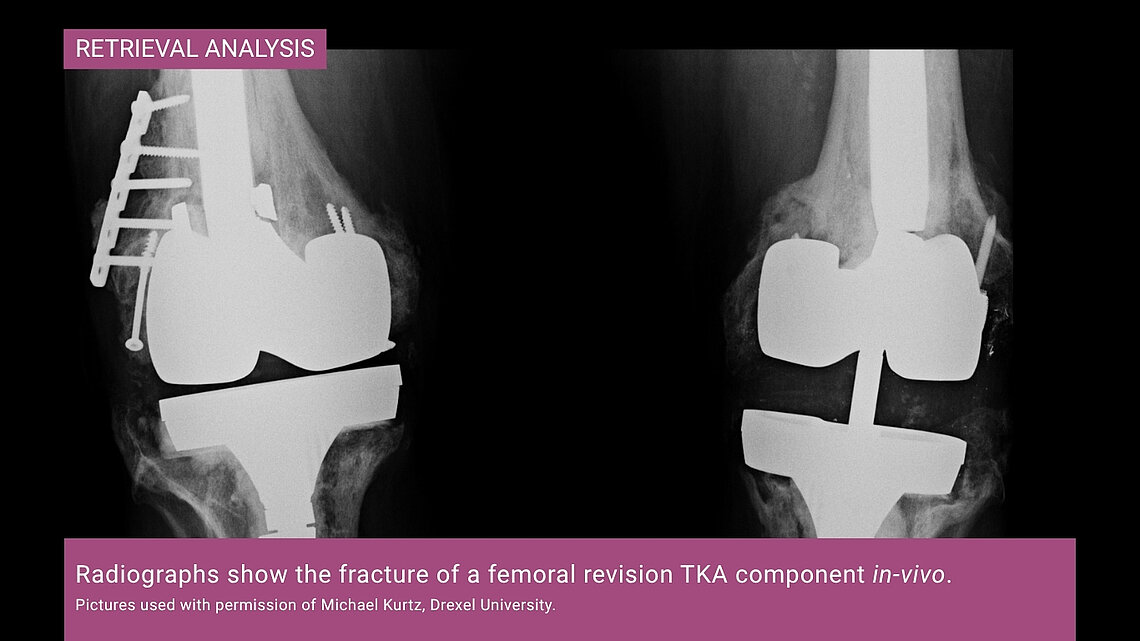
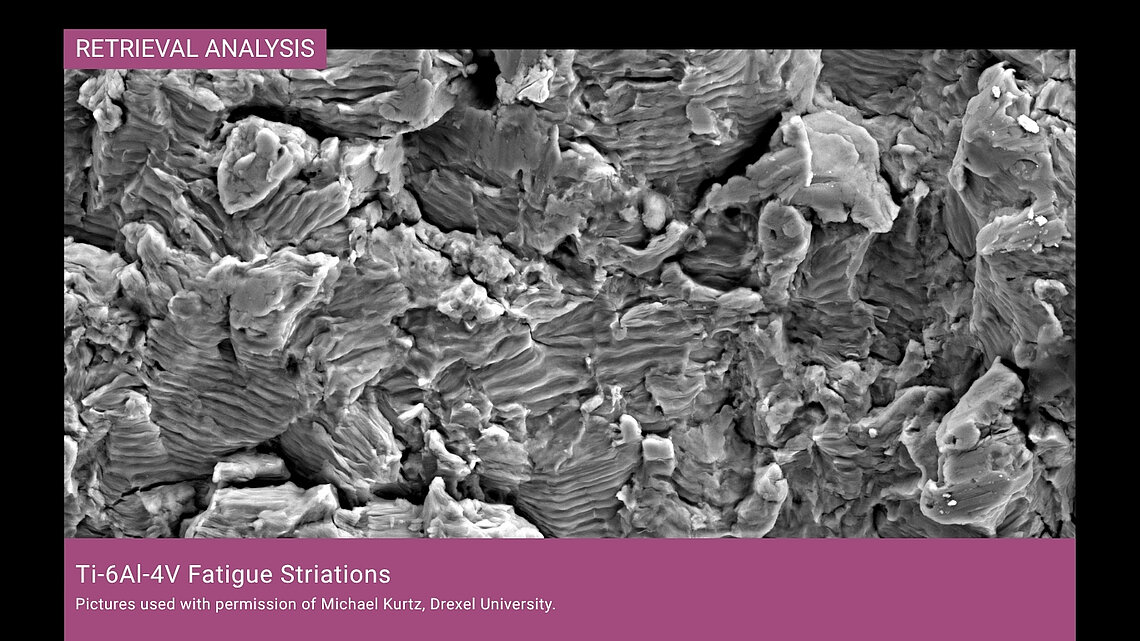
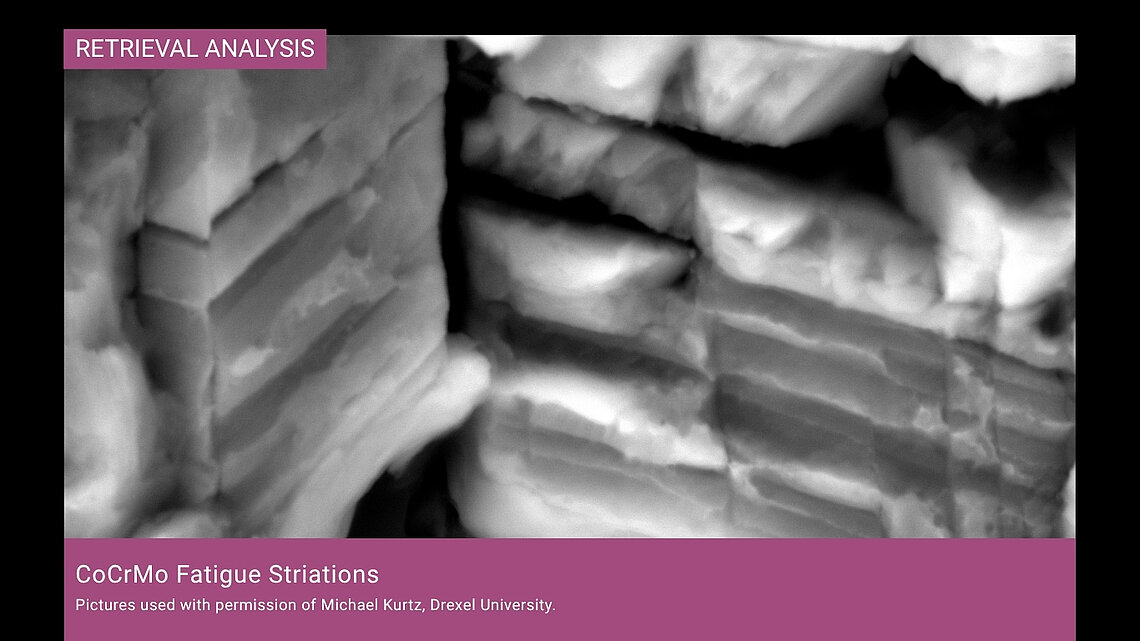
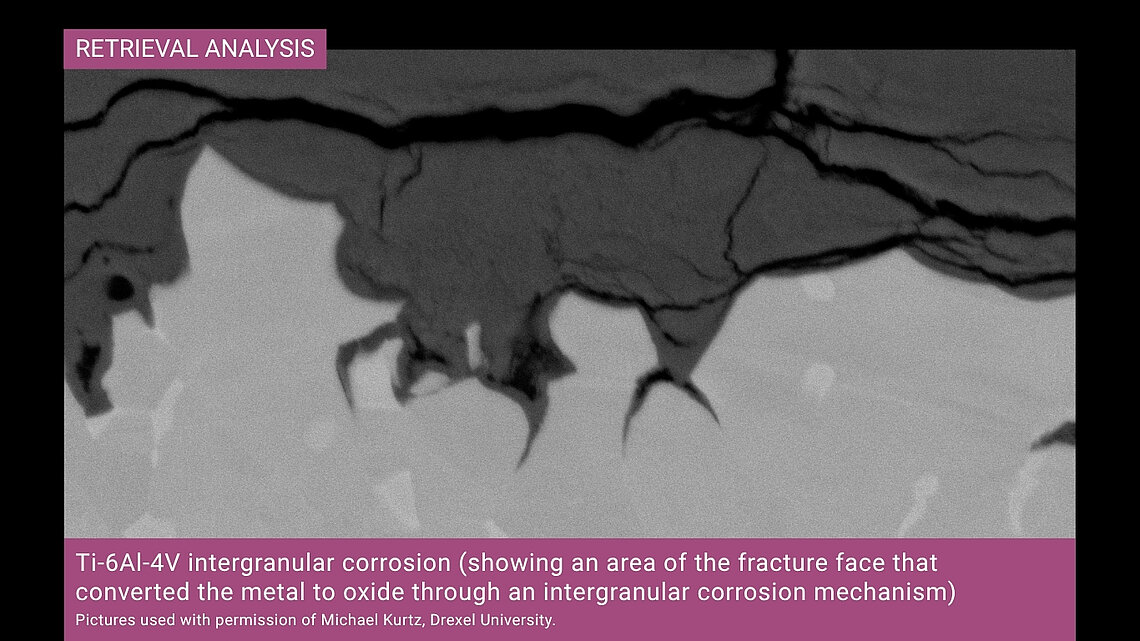
A retrieval analysis published in the Journal of Orthopaedic Research by Dr. Steve Kurtz et al. (Drexel University) highlights the underestimated risks of metal-related complications in revision total knee arthroplasty (TKA). Although revision TKA remains a laborious and technically demanding procedure, it is generally associated with good clinical outcomes, albeit inferior to those of primary TKA. This study highlights a critical yet under-studied failure mechanism on a microscopic scale: metal fatigue.
Text: The review compared 8 fracture cases (male-to-female ratio 7:1, median implantation time 5.5 years) to a sample of 489 patients with stemmed components. 6 of the 8 fracture patients had already undergone two previous revisions; one patient with no prior revisions had to undergo three subsequent revisions.
Key findings from the fracture cases:
|
While taper corrosion appears widespread in revision TKA, fracture itself remains rare. The authors describe a multifactorial mechanism, especially inadequate fixation combined with micromotion, corrosion, and cyclic loading over time.
The authors state clear study limitations: the stemmed-revision cohort data came from a single institution, the fracture cohort comprised only 8 retrievals, and the analysis methods were primarily qualitative. The authors themselves call for further investigation. Still, their findings reinforce the importance of careful material selection and attention to modular junction design in long-term revision TKA durability.
This text reflects CeramTec’s summary of a peer-reviewed scientific publication and does not constitute clinical guidance, risk prediction for individual patients, or product‑related recommendations. This post was drafted with AI assistance and approved by CeramTec.
📖 Kurtz MA, Gilbert JL, Shenoy AA, Klein GR, Malkani AL, Kurtz SM. Metal Fatigue Fracture After Revision Total Knee Arthroplasty: A Retrieval Analysis. J Orthop Res 2026. doi: 10.1002/jor.70198.