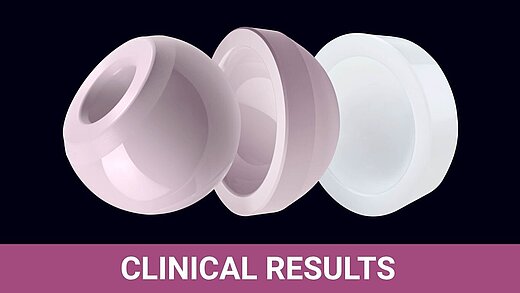
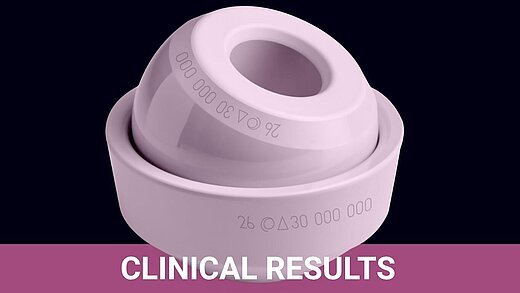
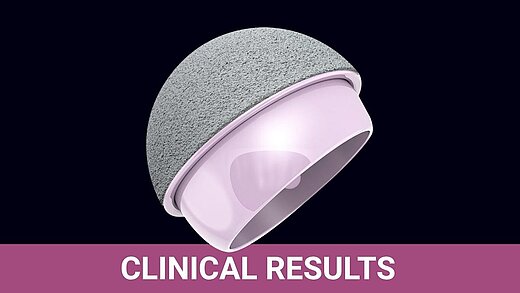
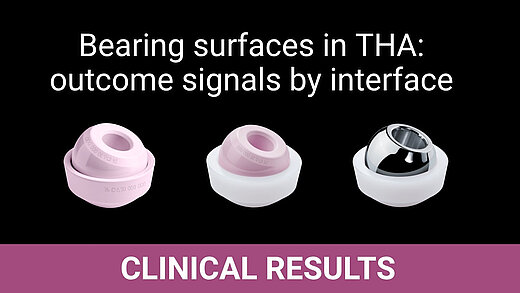
October 12th 2026 Ceramic-on-ceramic vs. polyethylene-bearings in THA: what can 120,000 hips tell us? A new meta-analysis by Dr. Lee Rubin (Yale University) et al. in the European Journal of Orthopaedic Surgery & Traumatology pools 33 comparative studies (randomized controlled trials and observational cohorts) encompassing more than 120,000 primary THAs. Read more
September 30th 2026 90.8% of femoral heads used in Japanese primary hip replacements last year were ceramic. 77.8% were BIOLOX®delta. That is what clinical trust looks like at scale. To mark the occasion, we are sharing real-world data from Japan, one of the largest hip arthroplasty markets in the world. Read more
September 8th 2026 Bearing choice and PJI risk: Evidence from a 10,602-patient THA cohort (Rothman Orthopaedics) Periprosthetic joint infection (PJI) remains a devastating potential complication following total hip arthroplasty (THA). While bearing surface selection has traditionally been discussed in the context of wear and long-term survivorship, a growing body of research suggests that implant material may influence the local immune environment – and even pose the risk of infection. Read more
September 4th 2026 BIOLOX®delta ceramic-on-ceramic monoblock vs. ceramic-on-polyethylene modular: what 5 years of radiostereometric analysis reveal for ceramic hip replacement Drs. Caner Içli and Nina M. C. Mathijssen, together with colleagues at the Reinier Haga Orthopaedic Centre and Reinier de Graaf Gasthuis (Netherlands), have published a new randomized controlled trial in Acta Orthopaedica. Read more
August 18th 2026 BIOLOX®delta - 4th-generation ceramic-on-ceramic bearings, stability, and low complication rates: a study of 10+ years A new prospective multicenter study by Lee et al. (University of Gwangmyeong Hospital and others in South Korea) in the Journal of Arthroplasty reports minimum 10-year outcomes of cementless total hip arthroplasty (THA) using 32/36mm BIOLOX®delta CoC bearings (Zimmer Biomet stem/cup system). Read more
August 7th 2026 What does the best available evidence tell us about BIOLOX®delta 4th-generation ceramic bearings in total hip arthroplasty? Profs Carsten Perka, Luigi Zagra, Maziar Mohaddes, Niklas Keller, Axel Ekkenkamp, and Dirk Stengel – hailing from institutions including Berlin’s Charité Medical University Center and Milan’s IRCCS Istituto Ortopedico Galeazzi – are the authors of one of the most comprehensive best-evidence synthesis to date. It draws on eight national registries, 20 systematic reviews, and over two decades of clinical use and real-world data to provide unbiased estimates of advantages and potential risks of 4th-generation ceramic bearings in THA, with a focus on BIOLOX®delta. Read more
July 30th 2026 Ceramic-on-ceramic tribology is a system & technology question – not a material question alone. CoC bearings have proven their long-term stability and performance in total hip arthroplasty. But what do we know about the mechanisms behind frictional instability, lubrication transitions, and microstructural damage? A research team at China’s Zhejiang Institute of Medical Device Testing set out to consolidate the current evidence. Read more
July 24th 2026 BIOLOX®delta Ceramic-on-Ceramic Hip Resurfacing: Wear Performance Under Daily Activities A new wear simulation study jointly published by Prof. Louise Jennings and Raelene Cowie (University of Leeds) and MatOrtho Ltd’s engineering team Danielle de Villiers, Colin Fisher, et al. evaluates the tribological performance of MatOrtho’s ReCerf® ceramic-on-ceramic hip resurfacing (BIOLOX®𝘥𝘦𝘭𝘵𝘢) over a range of daily activities (e.g. walking, jogging). The study moves beyond the standard ISO 14242-1 gait cycle to bearing behavior under more patient-realistic conditions. Read more
July 16th 2026 How do bearing-surface choices in total hip arthroplasty perform across patient age and follow-up duration? Bearing selection in THA is not a one-size-fits-all decision. A new network meta-analysis of 59 randomized controlled trials (RCTs) now quantifies what that means, stratified by patient age and follow-up duration. Read more