
BIOLOX®delta Ceramic-on-Ceramic Hip Resurfacing: Wear Performance Under Daily Activities
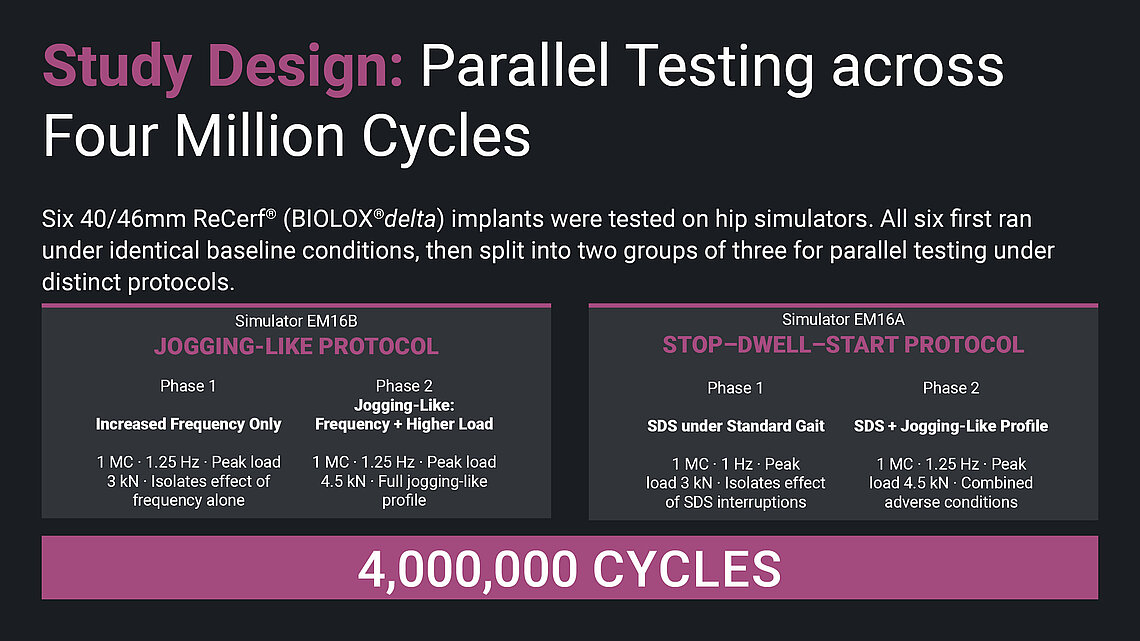

Six 40/46mm ReCerf® implants were tested on hip simulators and observed across four million cycles. All 6 implants were first tested together for 2 million cycles under standard ISO 14242-1 walking gait to establish a baseline.
They were then split into two groups of 3 and run on separate simulators:
- Simulator 1 (Jogging-like protocol): 1 million cycles at increased frequency only (1.25Hz), followed by 1 million cycles combining increased frequency (1.25Hz) with higher peak load (4.5kN) isolating each variable systematically.
- Simulator 2 (Stop–dwell–start (SDS) protocol): 1 million cycles under standard gait with SDS interruptions followed by 1 million cycles of SDS combined with the jogging-like profile (1.25Hz, 4.5kN).
Throughout all phases, motion inputs (flexion/extension, rotation, abduction/adduction) and force waveform shape were kept constant - only frequency and peak load were varied.
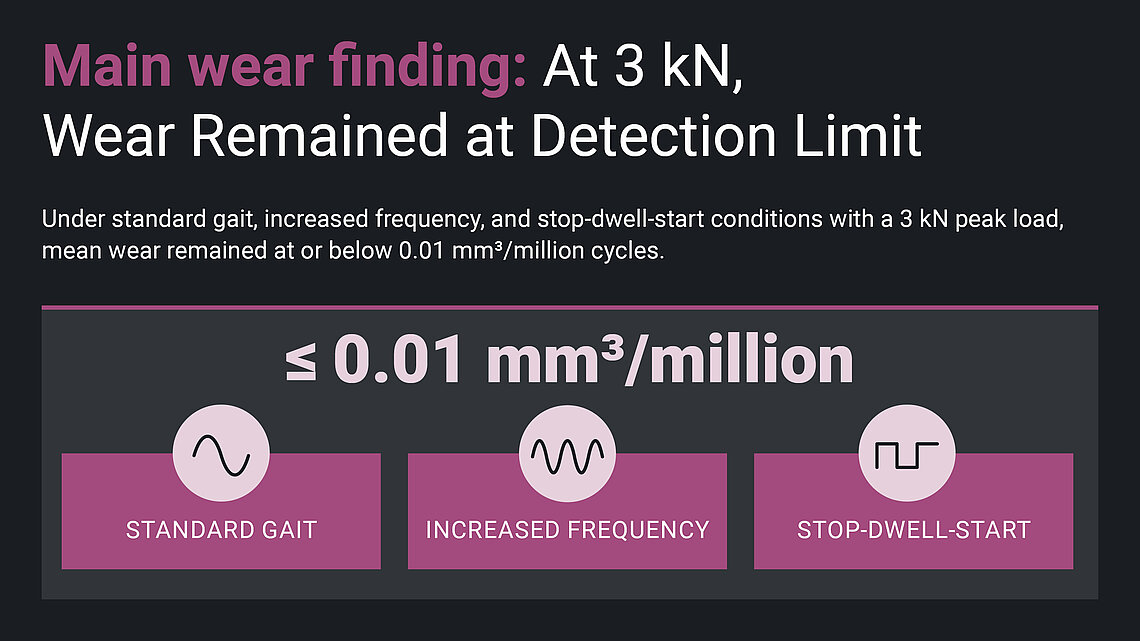
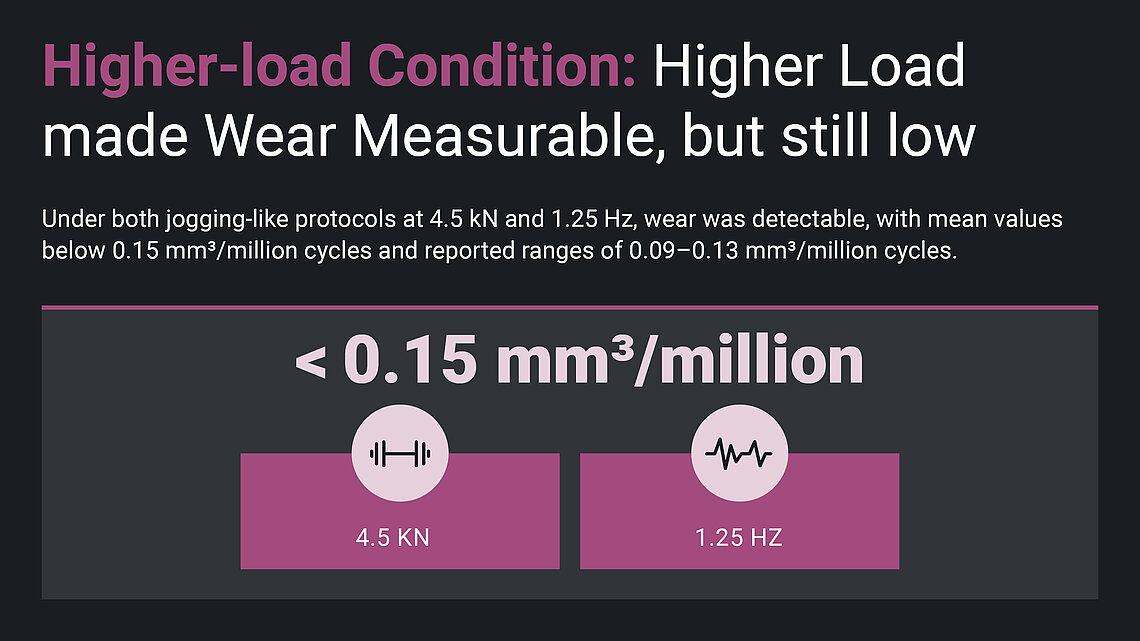
The key findings: |
|
Squeaking occurred only during simulator stop phases in some implants, not during continuous running, and was not linked to increased wear. The authors suggest abrupt simulator stopping may trigger lubrication-film disruption and vibration, exaggerating squeaking compared with real joints.
The study demonstrates |
|
The authors note some limitations such as:
- Small sample size (N=3) and short test duration limiting the generalisability of conclusions
- Uncoated test components, deviating from original clinical implant specifications
Discover the full open-access study: https://doi.org/10.3390/lubricants14060219
Please check for regulatory approval in your country.