
Ceramic-on-ceramic tribology is a system & technology question – not a material question alone.
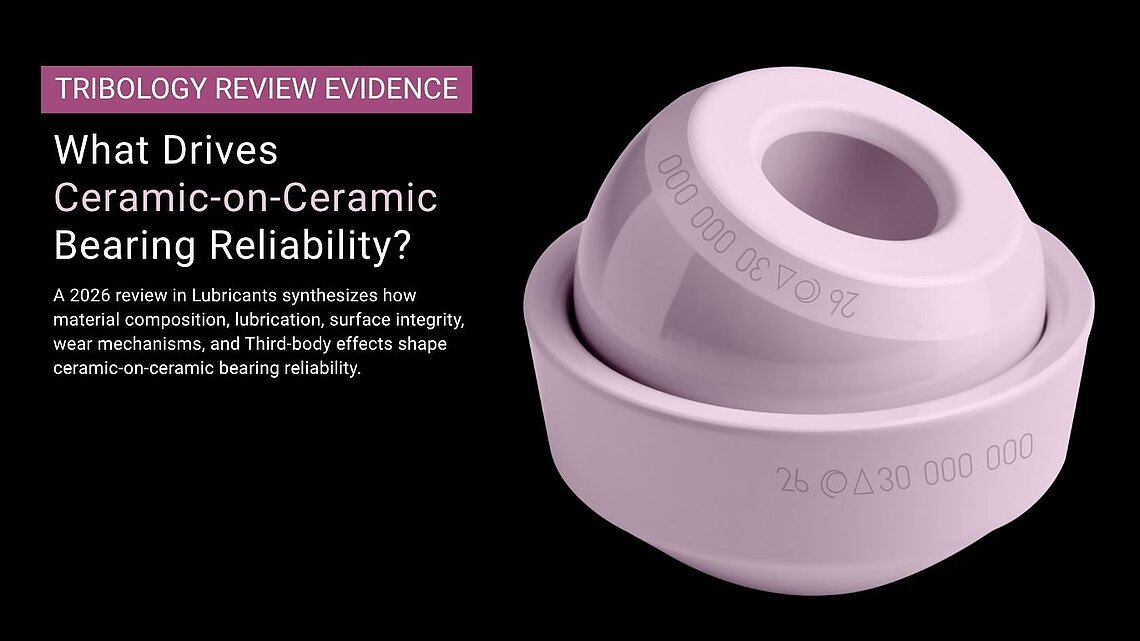
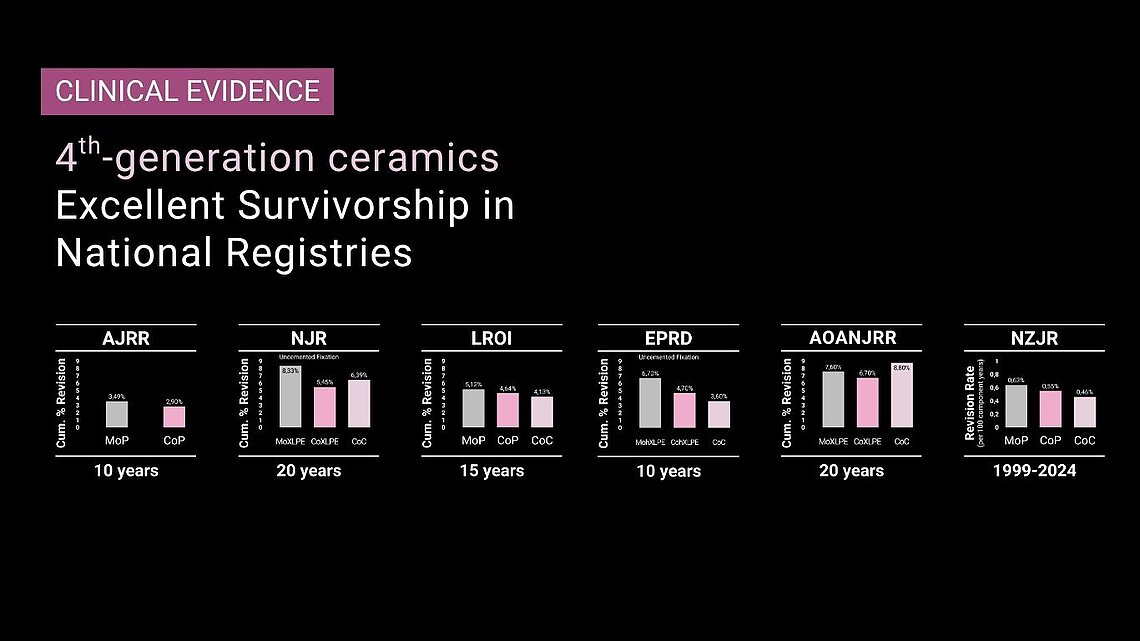

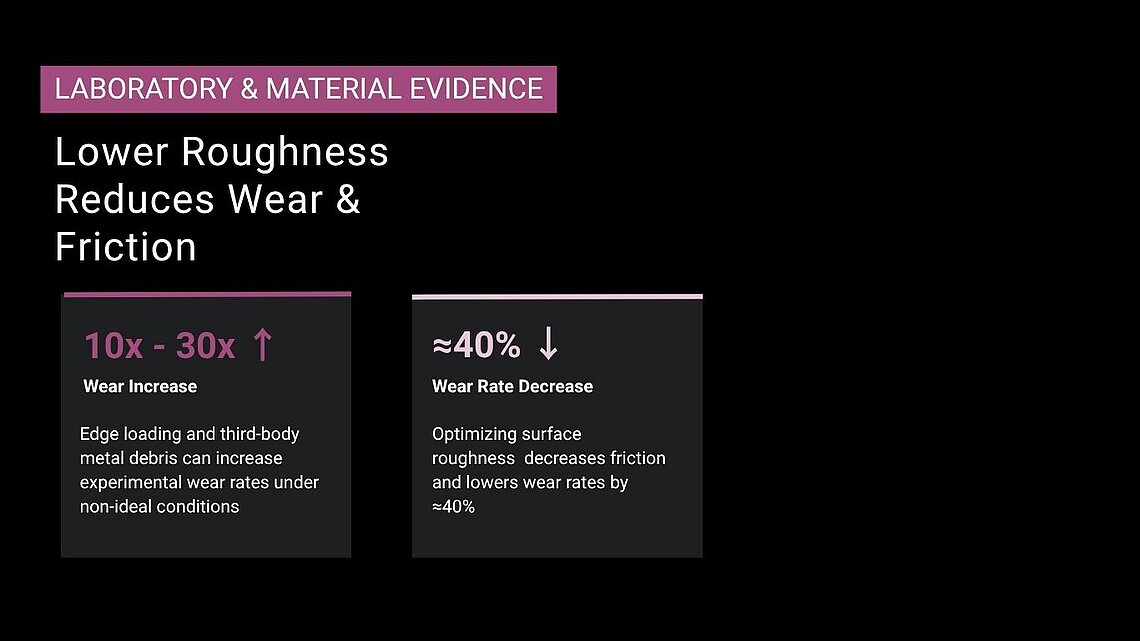
In their recent review, Zhou et al. describe how tribological behavior is shaped by the interaction of bearing material, surface integrity, lubrication, component design, joint mechanics, and surgical factors.
The authors identify 4 important areas for research and evaluation:
- Edge loading
- Material composition
- Lubrication film mechanism
- Third-body wear in CoC artificial joints
Here are their key findings: |
|
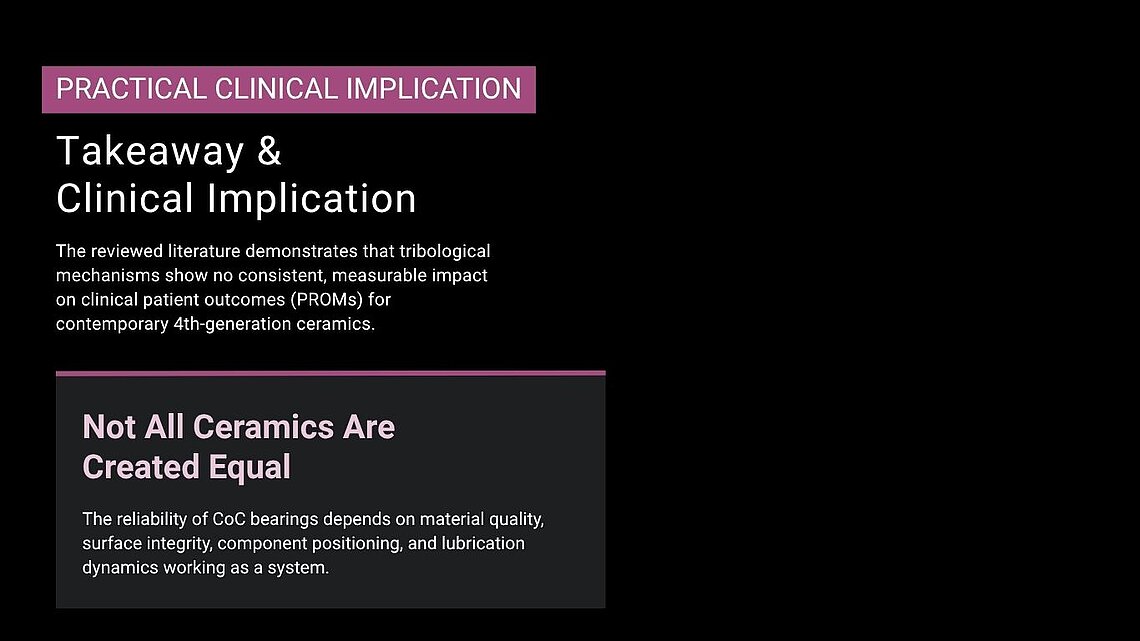
While CoC bearings are well established for their low wear rates and favorable biocompatibility, audible noise and ceramic fracture continue to be discussed in the literature. To date, however, available clinical data have not shown that these events in contemporary 4th-generation ceramic bearings result in higher complication rates or an increased need for revision.
Beyond the ceramic material, clinical evidence is influenced by component geometry, manufacturing consistency, and the way the bearing surfaces interact within the complete hip system. Furthermore, no consistent evidence currently demonstrates a measurable association between these phenomena and PROMs.
Zhou M, Lin Z, Jiang X, Jin J, Wan Q, Zhang L, Zheng Z. Advances in the Tribological Research of Ceramic-on-Ceramic Artificial Joints. Lubricants 14 (1): 36. 2026. doi:10.3390/lubricants14010036
Please check for regulatory approval in your country.
This article reflects CeramTec’s summary of a peer-reviewed scientific publication and does not constitute clinical guidance, risk prediction for individual patients, or product-related recommendations. For product, safety, and risk information, always refer to the labeling of the legal manufacturer. This post was drafted with AI assistance and approved by CeramTec.