
The AJRR Annual Report 2025: a digest of the main takeaways
Procedure:
77.7% of cases were elective primary total hip arthroplasties (THA).
Femoral head material:
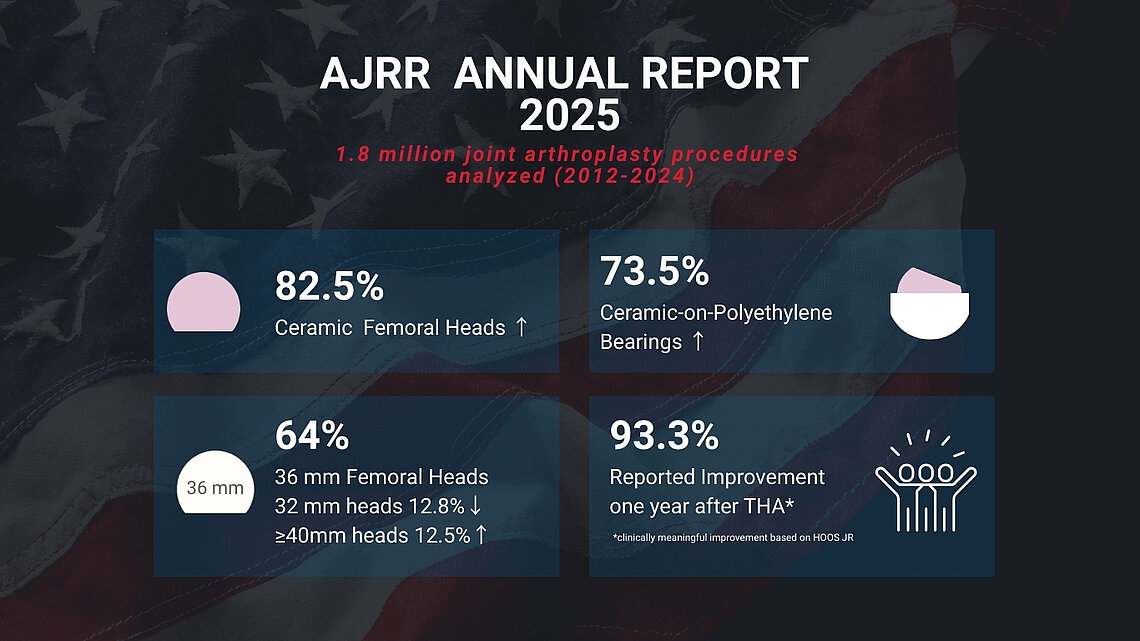
- Ceramic rose in use to 82.5% – more than double what the AJRR first found in 2012 (38.1%).
- CoCr declined from 55.8% to 6.8%.
- Ceramicized metal increased to 10.7%.
Bearing type:
- CoP (ceramic-on-polyethylene) increased to 73.5%.
- MoP (metal-on-polyethylene) dropped to 2.9%.
- Ceramicized metal-on-polyethylene increased to 10.7%
- Dual mobility bearings reached 7.7% in 2024, most often in revisions related to dislocation/instability (65.6%).
- 44 hip resurfacing procedures were reported in 2024, the majority in younger patients (mean age 53.4 since 2012).
Femoral head size:
- 36mm heads are now most common at 64% (up from 48.8% in 2012).
- 32mm heads decreased to 12.8% (from 33.6%).
- ≥40mm heads increased to 12.5%.
- Small heads (≤28mm) remain stable at ~3.5%.
- Among patients ≥65 years, 36mm heads have lower revision rates than 40mm heads between two and 10 years (as reported by AJRR).
Implant fixation: Cementless femoral stems remain the standard in the US, with only 4.6% of stems cemented in 2024.
Revision rates:
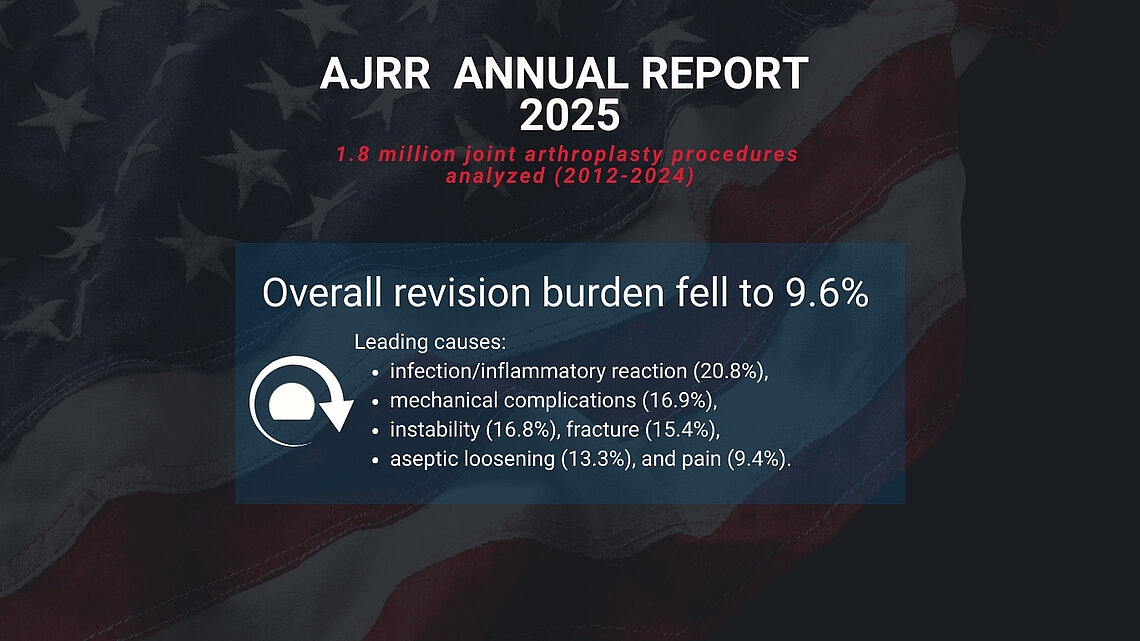
- Overall revision burden fell from 19.9% (2012) to 9.6% (2024).
- 10-year revision rates: CoP (2.90%), ceramicized MoP (3.07%), dual mobility (3.74%), MoP (3.49%).
- MoP showed higher revision rates compared to CoP in Medicare patients ≥65 with primary osteoarthritis (per AJRR).
Revision causes:
Leading causes included infection/inflammatory reaction (20.8%), mechanical complications (16.9%), instability (16.8%), periprosthetic fracture (15.4%), aseptic loosening (13.3%), and pain (9.4%).
Patient outcomes:
93.3% reported meaningful improvement one year after THA (HOOS JR), with significant gains in physical health on PROMIS-10 and VR-12 metrics (per AJRR).
For even more of the AJRR’s findings reflecting the evolution of arthroplasty practices and patient outcomes, visit the AAOS website: The AJRR Annual Report
This text was created with the support of AI.
Reference:
American Joint Replacement Registry (AJRR): 2025 Annual Report: The 12th Annual Report of the AJRR on Hip and Knee Arthroplasty. Rosemont, IL: American Academy of Orthopaedic Surgeons (AAOS), 2025. Accessed 13 November 2025.