
Which factors really drive long-term performance in total hip arthroplasty?

Because wear is central to long-term implant survival, the authors used finite element analysis (FEA) as a lens to quantify wear mechanisms and mapped how design parameters, biomaterials/coatings, and patient loading interact over time.
The findings, published in Surgeries (2026), confirm: wear is not governed by a single factor. It is the result of a complex interplay between material properties, implant geometry, and patient-related factors.
And the trade-offs are real:
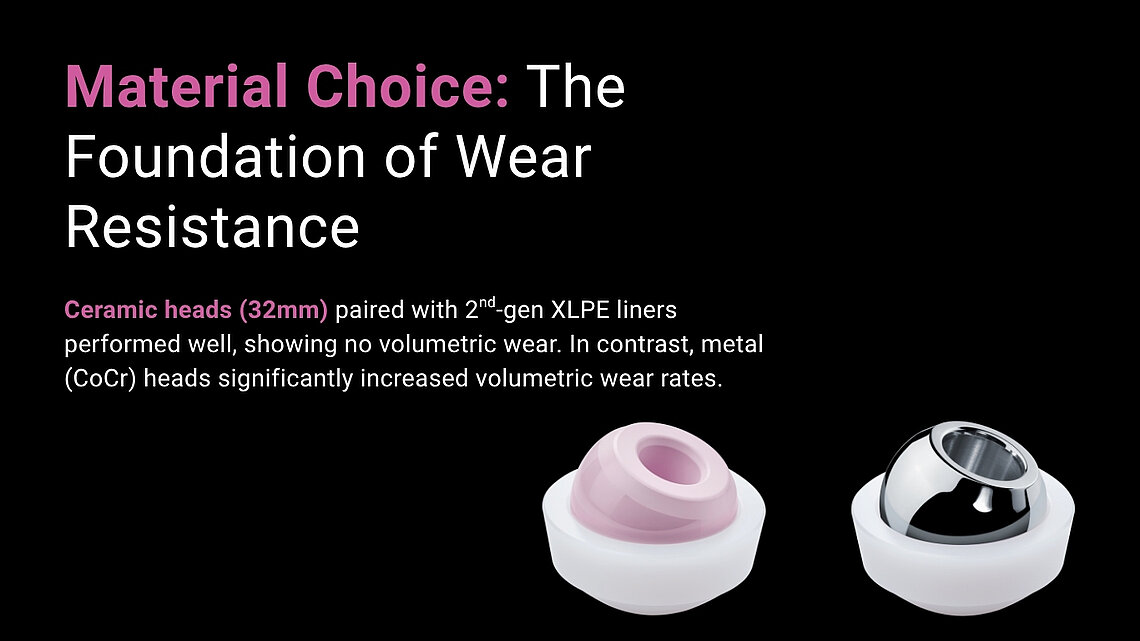
Material choice tells a story. Across the included studies, ceramic femoral heads paired with highly cross-linked polyethylene liners showed linear wear rates as low as 0.054–0.057mm³/Mc. Metal-on-metal bearing couples, by contrast, reached volumetric wear rates of 24.5±18.4mm³/Mc.
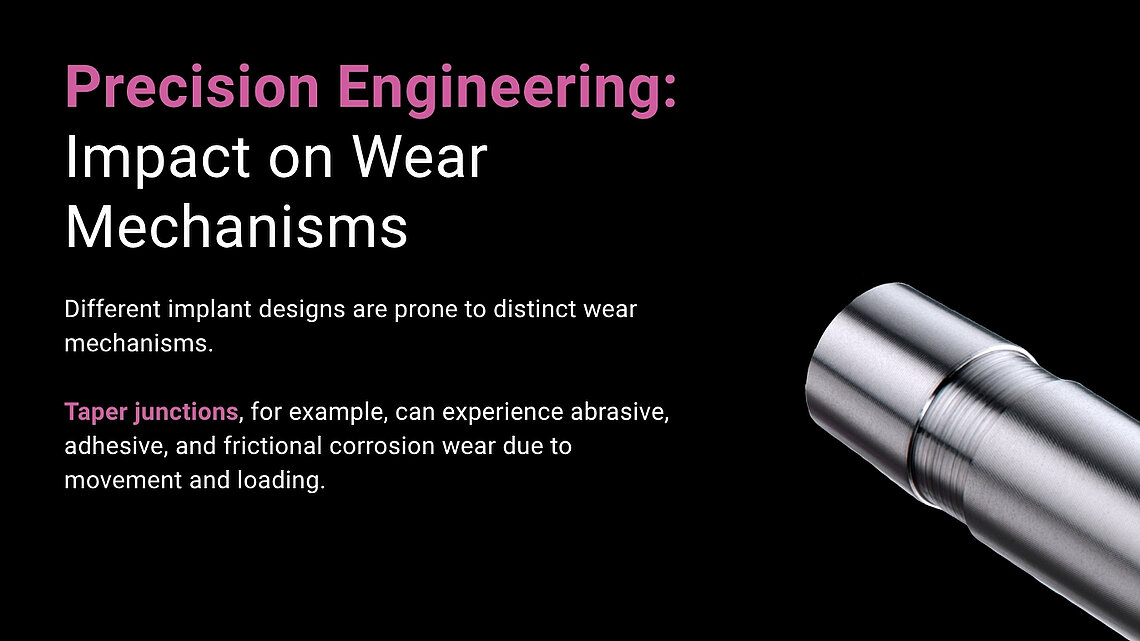
Design matters just as much as material. Finite element analyses showed that optimized patient-specific stem designs could reduce mechanical stress from ~664 MPa in standard geometries to as little as ~195 MPa. Different designs are prone to different wear. According to the authors, taper junctions (the meeting of femoral head + neck) can exhibit wear-related complications due to “relative movement and loading at the interface,” while taper pin joints can suffer abrasive wear, adhesive wear, frictional corrosion, and material degradation.
Biology, of course, plays its role. A 40kg increase in body weight could drive a ~26% increase in metal wear, highlighting the importance of patient-specific loading conditions in long-term outcomes.
The key takeaway? There is no single “optimal” solution, only optimized systems. Implant longevity depends on aligning material performance, implant design, and patient-specific biomechanics. Predictive tools such as finite element analysis are valuable not as a substitute for clinical evidence but as a means of anticipating wear, failure modes, and long-term behavior before they occur in vivo.
As younger, more active patients increasingly undergo THA, the implications are clear. Long-term success will depend on how well we integrate materials science, biomechanics, and patient variability into a truly evidence-based approach to implant design.
📖 Nikam N, Satish SB, Sawan S, Shyamasunder BN, Keni LG, Senay M, Chethan KN. Biomechanics, Material Performance, and Wear Analysis in Total Hip Arthroplasty: A Review. Surgeries2026. doi: 10.3390/surgeries7010007
Please check for regulatory approval in your country.
This post reflects CeramTec’s summary of a peer-reviewed scientific publication and does not constitute clinical guidance, risk prediction for individual patients, or product-related recommendations. For product, safety, and risk information, always refer to the labeling of the legal manufacturer. This post was drafted with AI assistance and approved by CeramTec.